Showing posts with label Hatha Yoga. Show all posts

Tuesday, March 3, 2015

What Are the Different Types of Yoga?

When getting started with yoga, it's a good idea to explore the different types, and what they can do for you. There are several different types of yoga and you really need to choose the one that you believe will give you the most benefits for what you are trying to achieve.

However, don't worry too much about picking the "right" type, as all forms of yoga will add benefit no matter which one you choose because the various types of yoga will always focus on creating calm and balance in the mind and body, while helping to increase strength, flexibility and overall fitness at the same time.

A yoga class.
A yoga class. (Photo credit: Wikipedia)
What many people regard as the most extreme form of yoga is Bikram yoga (sometimes known as "hot yoga) where the routines are performed in heated rooms where the temperature is set at 95 degrees or more. However, for some people this can add stress to their exercises and for that reason there are some people who believe that performing under those conditions is detrimental to your health.

People who use the Bikram yoga on a regular basis believe that the increased temperatures help to relax and cleanse your body and in doing so give you more benefits over the standard forms of yoga.

The more common form of yoga that you will find in most fitness centers throughout the country is Hatha Yoga. This is probably the best form of yoga for you to choose if you haven't done any form of this exercise in the past as it will teach you all the basic types of poses that will also be applicable to various other forms of yoga if you intend to move into those other areas at a later date.

Hatha yoga is excellent for people who haven't done much exercise previously and for elderly people as all the movements are slow and relaxing and will assist in helping you to gain more flexibility without too much concern of injury.

One step up from Hatha Yoga is Vinyasa yoga which is performed at a faster pace and focuses a lot on breathing during the movements. The stretches that are involved in Vinyasa yoga are more advanced than those in Hatha and are possibly not quite as suitable for a beginner.

There are many other variations of yoga apart from these that I just mentioned but they all have the same philosophy of getting the mind and body to work as one to bring about balance in your life. We will explore some of these, as well as tips for getting the most out of your yoga practice, in the next few weeks, so be sure to stay tuned!


Thursday, August 28, 2014

Video: 20-Minute Morning Yoga Workout for Weight Loss

This short and fun yoga workout takes only 20 minutes, but will help support your weight loss efforts, loosen up tight muscles, and energize you for the day ahead, so it's a great way to start off the day! It starts out very slow and easy, and then will speed up and become more challenging as your body warms up. You won't need any equipment other than a yoga mat. She gives very clear instructions along with the demonstration, so it is very easy to follow.

My husband and I are moving into our new house, so depending on my schedule, we may not be posting next week. But be sure to check back soon for more fun fitness tips and weekly workouts that help you get in shape fast!


More Fun Yoga Workouts for Weight Loss:
   

Tuesday, February 4, 2014

Review: Kundalini Yoga Workout for Beginners & Beyond

I got several new yoga DVDs for Christmas this year, and I'm still working my way through them all, so I'm not sure what my favorite is yet, but if you're new to Kundalini Yoga, you can't go wrong with the excellent Kundalini Yoga for Beginners & Beyond, with Ana Brett & Ravi Singh. I absolutely love their simple, soothing style, and all of my Kundalini yoga DVDs that I have tried so far feature them.

http://www.amazon.com/gp/product/B000BRM992/ref=as_li_ss_tl?ie=UTF8&camp=1789&creative=390957&creativeASIN=B000BRM992&linkCode=as2&tag=newholliv-20
This DVD is a great introduction to Kundalini yoga, which is quite different from the Hatha forms of yoga typically taught in yoga fitness classes, so if you're expecting more of the same old Downward Dog and Crescent poses, you may be disappointed. But if you're open to a new form of yoga which challenges your mind and spirit as much as your body, give this one a try without any expectations, and see what it can do for you.

This workout contains exercises for flexibility, strength, aerobic efficiency, stress relief, back care, and more - together with explicit instructions on breathing and guided meditations. This amazingly effective daily routine features two yoga sets which can be done individually or together, as well as a guided meditation and relaxation segment.

The first exercise set focuses on maintaining a strong and flexible spine - important for every aspect of health. The second set consists of a series called "The Five Tibetans," and yes, it does include some of the traditional yoga poses, but you will flow through them repeatedly and rhythmically, rather than holding them, along with specific types of breathing, so it really works all of your muscles and increases your heart rate as well, and provides quite a challenge for your entire body. I've only done this set a few times so far, and I can't do all of the repetitions yet, and still end up very sore for a couple of days afterwards, so don't let the "beginner" title fool you - this is a real workout!

This DVD also includes the "Matrix" option, which I love - I wish all workout DVDs had this! This allows you to choose which segments you wish to do, and program them to play in the order you choose. It makes it really easy to set up your workout to fit into whatever time you have available. If you have a whole hour, you can just play the whole DVD through. But if you only have 20 minutes, you can choose the opening "Tune In" prayer, the first (or second) workout set, relax, and you're done. Or add the meditation if you are feeling extra stressed that day. It's up to you!

If you want to try a new, fun way to exercise this year, check out this DVD and add a new element to your fitness.

Click Here to Buy It On Amazon.com...


Enhanced by Zemanta

Thursday, January 9, 2014

Video: Introductory Kundalini Yoga Workout

Most people are familiar with different forms of Hatha yoga, but you may never have tried (or even heard of) Kundalini yoga. This form of yoga is less focused on what you might think of as yoga poses, and more on breathing and meditation, connecting your mind to the physical movements of the body, sometimes with more rapid movements, incorporating more elements of cardiovascular exercise.

I've only been introduced to Kundalini yoga fairly recently, and I absolutely love it! I still do Hatha yoga too, but my Kundalini practice is what keeps me balanced, relaxed, focused, and relieves stress and anxiety. Basically it just makes me happy!

I received several Kundalini yoga DVDs for Christmas, so I will be reviewing those for you as I work through them, but I wanted to share an introductory Kundalini yoga workout with you today. This one is a full-length workout, so be sure you have the time set aside to do the whole thing to reap maximum benefit. If you've never tried Kundalini yoga, it may take some getting used to, but just keep an open mind and follow the instructions, and try not to compare it to other forms of yoga you might have done, but approach it as a new experience and relax into it.

As always, remember to be gentle, listen to your body, and check with your doctor if you're not sure you're in good enough shape to do yoga.

Give it a try, and enjoy this unique form of exercise for mind and body!

Yoga Workout Introduction to Kundalini Yoga
yoga for beginners yoga class


Try More Kundalini Yoga:
   
Enhanced by Zemanta

Thursday, April 4, 2013

Yoga for Computer Users: Supported Side Stretches

Many computer users around the world face the problem of back pain. Sitting down for all or most of the day can really wreak havoc on your back. Having your back against the wall usually means you're in trouble. But for certain yoga positions, having your back firmly against a wall will aid health.

Yoga Pose at Work - Side Stretch
Yoga Pose at Work - Side Stretch (Photo credit: myyogaonline)
In Hatha Yoga, the practitioner forms what Swami Gitananda calls body geometry--triangles, straight lines, circles and parallel lines. When you do a posture, always stretch your body to its utmost limit and then hold it there for a slow count of 10, gradually building up the time, until each posture can be maintained for 30 seconds. Holding a posture is essential to yoga because it gives the body a chance to settle into the stretch and loosen up. Then each time you stretch it will be just that little bit farther.

Many of the sideways, or lateral, stretches in Hatha Yoga require that the body face forward, with hips level and back and spine tilting neither forward nor back. Beginners tend to lean forward to increase the stretch. But leaning forward is wrong and will actually detract from benefits and possibly cause harm. To perform these stretches properly, make sure to keep your spine firmly against a wall. The wall acts as a prop. Even those who have practiced yoga may find that they cannot bend as far as they thought they could when they do the postures properly. The extra time spent in forming careful postures will pay off: Your body will gain excellent flexibility and strength.

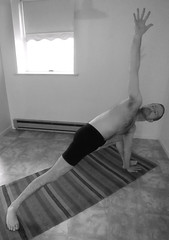
Below are a couple of yoga stretches that are excellent for computer users or other sedentary people (the Triangle pose is very similar to the Side Angle Stretch, but both legs stay straight, so it's somewhat more advanced; learn the Side Angled Stretch first):

The Side-Angled Stretch (Parshvakonasana)

Side Stretch
Side Angle Stretch (Photo credit: Nicholas_T)
Stand straight against the wall and stretch the feet about three to four feet apart. Inhale and raise arms up to shoulder level, palms down. Point right foot to the right and slightly turn in left foot. Bend right knee to form a right angle, with thigh parallel to the floor and the shin vertical. The knee should be directly above the ankle. Stretch the back leg and tighten the knee.

Exhale and stretch right hand down to rest on floor behind right foot (for a beginner version, rest elbow on bent knee). Turn head to look up and press left hip flat against wall with left hand. A strong pull should be felt all along the left side. When you feel comfortable, stretch the left arm up and press it against your ear so that from left heel to left hand the body is stretched and extended. Hold this position for a slow count of 10, making sure that upper shoulder, hip and bent knee are pressed against the wall. Inhale and return to starting position. Exhale and repeat on left.

Benefits: This posture produces overall health. It tones every muscle, tendon and joint in the body. The heart is revitalized and strengthened, and, if crooked, the spine is stretched and realigned. The hip joints, which can weaken with age, become stronger and more flexible. The neck is stretched and made more flexible, easing the pain of stiff, tense muscles and spondylosis. Thighs, hips and waist are firmed. Even digestion is improved.

Remember to lie down and relax after your yoga practice. Relaxation after exercising helps the body to recover, regulates the flow of blood, and calms and soothes the mind. That way you don't feel tired but refreshed and invigorated.

The Triangle (Trikonasana)

meet our roots
Triangle Pose (Unsupported) (Photo credit: lululemon athletica)
Stand with your back against the wall. Place your feet two or three feet apart. Keeping feet firmly on the floor, and weight balanced on heels and toes, stretch your body up, pressing shoulders back and allowing arms to hang at your sides. Inhale.

Exhale and slowly bend from waist, sliding your right hand down the right side as far as it will go. Shoulders should press back and hips should remain level, pointing forward. Head should be turned to the side, so that it's at a right angle to the body. Hold posture for 10 slow counts, inhale and come up to starting position. Exhale and repeat on left. Inhale and come up to starting position.

Exhale and rest a moment. Inhale and slowly raise arms to shoulder level, palms down. At the same time, point the right foot to the right at a 90-degree angle while keeping the left foot turned in slightly. Exhale and bend to the right, sliding hand down to ankle or foot. If possible, touch the ground behind foot. Pull hip square against wall with left hand and turn head to look up.

Inhale and raise left arm straight up over head so that arms are in a straight line. Keep hips and torso against the wall as both arms stretch, one down and one up, touching the wall. Hold posture with smooth, even breathing for a slow count of 10. Inhale, come up and repeat on left.

Benefits: Trikonasana helps produce excellent spinal flexibility. It stretches the legs, back and neck and helps to loosen up the hips and make them strong and flexible. It is also, to some extent, a balance posture; in yoga, it is believed that the skill developed in physical balance has a profound effect on the mind, quieting unruly emotions and creating calm. It is one of the best postures for slimming the waist, hips, arms and legs. Remember to breathe deeply in when stretching up and breathe deeply out when bending the body downward.

Enhanced by Zemanta

Thursday, May 10, 2012

What Is A YogaFit Workout?

I'm sure you're familiar with yoga, but one fun exercise trend you may not have tried yet which is growing in popularity lately is called YogaFit.

Yoga Class at a Gym Category:Gyms_and_Health_Clubs
Yoga Class at a Gym (Photo credit: Wikipedia)
YogaFit was created in 1994 by an experienced certified yoga instructor named Beth Shaw. Beth noticed that traditional yoga principles did not always translate well into the group setting that is commonly found in today’s health clubs.

YogaFit differs from more traditional yoga practice in several important ways. First, YogaFit does not strictly adhere to the ancient Sanskrit names of various postures and poses, which makes YogaFit more reliable and easier to pick up for many participants. In addition, YogaFit does not incorporate the traditional “chanting” that is sometimes done in certain yoga stances. This helps to distill the various yoga exercises into the most “user friendly” experience possible.

What Are the Benefits Of YogaFit?

YogaFit is based upon the time tested principles of Hatha yoga. This style of yoga combines exercises and poses that work to develop a practitioner’s balance, strength, power and flexibility. Yoga poses and movements are ideal as a low impact and safe way to exercise nearly all of the muscles of the body without weights or complicated machinery.

Balasana pose in Hatha yoga, commonly known as...
Balasana pose in Hatha yoga, commonly known as child pose (Photo credit: Wikipedia)
YogaFit also has the benefit of greater accessibility. Some exercisers may be intimidated by (or simply don't relate to) the “spiritual” elements of traditional yoga, so YogaFit offers them a way to take advantage of all of the fitness benefits without having to get up to speed on the nonphysical ones.

How to Get Started with YogaFit

There’s a good chance that YogaFit is currently being offered in a health club or gym near you. Because YogaFit has proven so popular with so many individuals, a number of yoga studios across the country have added YogaFit classes to their traditional yoga offerings. If you have a yoga facility located close to where you live, then this might be the best place to take your first YogaFit class.

If you’re already a member of a fitness facility, ask the staff if they offer YogaFit. If not, then tell them you’re interested. Even if a health club doesn’t have a particular offering, they are likely to consider adding it if enough of their members express an interest.

Wherever you decide to take a YogaFit class, make sure that your instructor is properly certified. YogaFit trains its teachers through various levels of expertise, and also offers three different levels of certification. YogaFit also works to keep its instructors fresh and up-to-date on new techniques through a continuing education program. Many of the YogaFit instructors choose to receive their continuing education at various conferences that are conducted each year throughout the U.S. and Canada. Many of these conferences also have programs that permit students to participate. For individuals who are fully embracing the YogaFit lifestyle, these conferences can be a great way to better their understanding of the exercises they are doing.

You can also find YogaFit workouts in DVD or book format, so you can try this at home whenever you like. Beth Shaw's version is probably the most popular and well-liked, and you know you're getting great instruction, since she is the founder of the method! See below to pick up a copy for yourself.


YogaFit Resources For Home Workouts:
   
Enhanced by Zemanta

Saturday, March 17, 2012

Seane Corn Vinayasa Flow Yoga Review

Yoga has become extremely popular over the past few years. So popular that fitness experts are creating new yoga styles and formats to keep people interested and to draw customers to their studio. Most recently you might have heard of aerial yoga – yoga performed on low hanging trapeze bars!

This may sound intriguing, but if you’re new to yoga, or simply want to learn the basics before you hang upside down, consider Vinyasa Flow Yoga.

Vinyasa Flow yoga is an ancient from of Hatha yoga. It flows from one pose to the next. Your movements and transitions into the next pose are based on your breath. You exhale and inhale depending on the instructor’s guidance. It’s an excellent form of yoga because it provides all of the benefits of yoga including:

* Strength training
* Endurance
* Fat burning/cardio benefits

However, it also provides mindfulness, stress reduction and mental clarity. The awareness of the breath and the flow of the poses keep you in the moment and focused.

Seane Corn is a world renowned yoga teacher and expert. She’s in demand all around the world. Speaking at conferences and teaching yoga classes to teachers and students combined. Her first DVD series is called Vinyasa Flow Yoga Sessions, and it consists of two DVDs.

The first DVD is for beginners, and is subtitled “Uniting Movement and Breath.” It’s an excellent program if you’re new to yoga and want to learn the foundational movements. It’s a full 60 minute program.

The second DVD in the series, “The Body and Beyond” helps you move deeper into a yoga practice. Both are recorded live so you get the one-on-one feeling that Seane is there with you in your living room providing fitness, yoga and spiritual guidance.

Yoga is a superior way to get in touch with your body. It helps you burn fat and calories – if you're overweight, you will lose weight on a regular yoga fitness program. And yoga also helps sculpt your muscles and build strength. It’s a combined fitness approach. However, yoga also offers something more than a traditional fitness program. It provides mindfulness and mental clarity. You feel good both physically and mentally when you’ve completed a yoga workout!

If you’re new to yoga, there’s no better place to start than with a basic yoga form like Vinayasa Flow. And there’s no better teacher to start with than Seane Corn. The DVD set retails for around $35. There’s no other required equipment. However you may find that a yoga mat makes you more comfortable.

Enjoy the benefits of yoga in the comfort of your own home. You can perform your workout in the morning when you first wake for an energized and stress free day. Or you can complete the program in the evening after work, or before you go to bed. Either way, you’ll be on your way to better health and fitness.

You can find the series easily online at Amazon.com. See below for some handy links.

Seane Corn's Vinyasa Flow Yoga Series:
   
Enhanced by Zemanta

Tuesday, January 31, 2012

6 Healthy Benefits of Yoga For Your Body And Mind

Yoga is an exercise technique that also works remarkably well to achieve mental and emotional harmony and helps the mind work in synchronization with the body. How often do we find that we are unable to perform our daily activities properly and in a satisfying manner because the confusions and conflicts in our mind weigh so heavily upon us?

Yoga postures Bhagaritasana.intro.Image via WikipediStress is the number one culprit affecting all parts of our physical, endocrinal and emotional system. Yoga can help relieve stress and balance all of these systems to work in harmony as they should. And at the physical level, yoga and its cleansing practices have proven to be extremely effective for various disorders.

Listed below are just some of the benefits of yoga.

1: Yoga is known to increase flexibility. Yoga has postures that work all the different joints of the body, including those joints that are not acted upon with regular exercise routines.Putting these joint through their full range of motion on a regular basis increases blood flow, leading to more flexibility and less stiffness and pain.

2: Yoga also increases the lubrication of joints, ligament and tendons. The well-researched yoga positions exercise the different tendons and ligaments of the body, further adding to flexibility while improving joint health.

3: Yoga also massages all organs of the body. Yoga is one the few (if not the only) exercise forms that can work on your internal organs in a thorough manner, including those that rarely get externally stimulated during our daily lives. This increases blood flow and improves function throughout our bodies.

4: Yoga acts in a wholesome manner on the entire body. This stimulation and massage of the organs and muscles in turn benefits us by keeping our bodies in top working order, thus helping to prevent disease and illness.

5: Yoga offers a complete detoxification of the body. Because it gently stretches the muscles and joints as well as massaging the various organs, yoga ensures the optimum blood supply to various parts of the body. This helps in the flushing out of toxins from every nook and cranny of your body as well as providing needed nourishment. This leads to benefits such as delayed aging ,increased energy, and a more healthy and peaceful life.

See: www.falundafa.org/eng/exercises.htmlImage via Wikipedia6: And let's not forget, yoga is also an excellent way to tone your muscles! During a yoga workout, muscles are stretched, strengthened, and challenged, leading to a stronger, more toned and healthy body, with less pain and less susceptibility to injury.

But these enormous physical benefits are just the physical effects of this powerful practice. Yoga also helps to harmonize the mind with the body, similar to meditation, but with a more tangible physical result as well.

This in turn creates a remarkable calmness and a positive outlook, which also has tremendous benefits on the physical health of the body. Both your body and mind can reap great benefits through the regular practice of yoga.

Enhanced by Zemanta

Tuesday, November 29, 2011

An Introduction to Bikram (Hot) Yoga

Most people have at least a passing knowledge of what Yoga is these days.  But until you have tried Yoga it is impossible to know whether or not it is for you.  Yoga, quite simply can be a life changing experience and the discipline and mental strength that result from it can completely change your perspective and world view.

Bikram Choudhury at a book signing in New York...Image via WikipediaOne method of Yoga which is currently very popular is know as Bikram Yoga.  Bikram Yoga, often referred to as "hot yoga" follows the Bikram Yoga Method.  As with all Yoga it has multiple goals - to build your inner strength as well as your outer physical strength.  A vital component of Bikram Yoga is the flexibility and balance required to perform the exercises and it is believed that this comes from mental strength as much as physical practice.  The roots of Bikram (and most other yoga forms) are in Hatha Yoga, which is a healing form of Yoga that strengthens both body and mind.

The founder of Bikram Yoga was Bikram Choudhury, a yoga practitioner and innovator.  After a weightlifting accident Bikram Choudhury was determined to recover and set about investigating the healing ability of practicing certain types of exercise.  The result was Bikram Yoga, which so many people found to be an effective method of healing that it's tenants were recorded and passed on as a new form of Yoga.  Those who practise Bikram Yoga purely for it's healing benefits are plentiful, but there is also a strong holistic component, which is a key reason behind using Bikram Yoga for many of those who are regular users.

They key to success with Bikram Yoga is to develop the mental strength required to discipline yourself in it's use.  If you can master this side of the Yoga then the physical benefits will be forthcoming.  They have been proven by scientists including a group from the Tokyo University Hospital.  The medical benefits are beyond question and have been shown to improve chronic ailments as well as greatly assist in the treatment and recovery of tissue injuries.

Emily Bikram Yoga 19Image by OpeningMinds via FlickrAt the 1972 International Medical Conference the findings were presented and it was concluded that Bikram Yoga had the ability to assist in the recovery of internal tissue.  The explanation given was that the positions practised by Bikram Yoga replenish cells and assist in the lymphatic system flushing toxins from the body.  In addition to the toxin drain the cells are assisted by higher oxygen flows during and after exercise. Bikram Yoga is typically done in a heated room, and the heat is believed to increase flexibility and improve circulation.

Bikram showed that to get the best benefits from the exercise a healthy and well balanced body was important.  Where the body is weak Bikram Yoga will have less affect in the healing process, which relies on correct balance and circulation. 

Bikram demonstrated 26 exercises and recommended a regime, which was to be practised every single day in order to best treat the body.  Each posture exercise was developed based on a background of both Eastern and Western Yoga disciplines.  They all focus on the movement and pressure on muscles, nerves, ligaments glands and organs.  The exercises are meant to be performed together and in sequence, because they are all inter-related to each other.

Bikram Yoga is low impact and can be performed by people of all different ages.  The important component is the discipline required to perform the posture exercises every day for maximum benefit.

Enhanced by Zemanta

Bikram Yoga Resources:
   

Tuesday, November 15, 2011

My Yoga Obsession

So I tried a new yoga class last night. My best friend wanted to go try a class at this new place, so we both went to check it out. I am finding I am becoming rather obsessed with yoga! I've done Pilates for over 10 years, and really loved it for a long time, until I hurt my back, and since then I've found that Pilates can be very stressful on it. I've actually hurt my back a couple of times doing Pilates, although now that I know to be careful with certain exercises, I usually do okay. But yoga has never hurt my back - on the contrary, it usually makes it feel better, which is interesting as there are several poses you would think might be hard on the back, but I haven't found it to be so.

Hatha Yoga Standing Balance Pose - Warrior 3Image by myyogaonline via FlickrYoga provides both stress relief and relaxation, and a great workout - and sometimes even pain relief. And I am really fascinated by all the different types of yoga out there - it's quite interesting to see the differences between the styles! (If you aren't that familiar with yoga yet, and aren't quite sure what I'm talking about, check out our previous post on the different types of yoga.) The class we attended was a Hatha Yoga class - this is the most popular type of yoga, although there are many variations within Hatha as well. I had previously attending another Hatha class a few times, which was VERY different. Last night's class was very relaxing, done in a rather dark room, and involved a lot of slow stretching and breathing - it wasn't nearly as hard of a workout as the previous class I had gone to, although it was a longer class. But any way you slice it, I love yoga!

 I recently got my hands on a couple of new yoga DVDs - Yoga & Pilates: Total Body Toner - a combination of yoga & Pilates which seems deceptively simple, but actually is quite a decent workout, and Shiva Rea: Creative Core & Lower Body - Vinyasa or "Flow" yoga, which is short but I found it very challenging, and it really is a full-body workout despite the title. I've only done these once, so I will post a full review of them once I get into them a bit more, but the first time through I really enjoyed them a lot.

As for last night, I'm not sure if I will return to that class.... It's not that convenient for me in terms of location, and the wood floor was too hard for me, even with my trusty yoga mat. Plus it wasn't very challenging in terms of a workout, although I did enjoy the relaxation benefits and I can always use the stretching. But it was definitely enjoyable - after all - it's yoga!  :-)

For some of my favorite yoga workout DVDs, see below. Or visit our Amazon store for more fun ways to exercise.


Yoga Favorites You Can Do At Home:

   
Enhanced by Zemanta

Tuesday, October 11, 2011

Guide to Different Yoga Styles - Part 1

If you’re considering taking up yoga you may feel overwhelmed. There are many styles of yoga. Understanding them all and knowing which one is right for you can be complicated. You are welcome of course to try several different styles of yoga and see which you like best, but this guide can also help you make a choice.

A yoga class.Image via WikipediaHatha Yoga
Most yoga styles are Hatha based. In fact there are more than 90 different types of Hatha yoga. Hatha yoga is based on poses or asanas, cleansing techniques and breathing. If you’re looking at a yoga class or practice chances are it is a form of Hatha yoga. Ha and tha mean sun and moon. It’s a forceful type of yoga that can be physically demanding. However, when most people talk about yoga they’re referring to Hatha yoga. It’s the most popular type of yoga.

Ashtanga Yoga
Ashtanga is a type of Hatha yoga. It is physically demanding. You’ll move quickly through series of postures. This type of yoga is designed to build strength, flexibility, and endurance. If you’re a beginner, only take an Ashtanga yoga class if they offer beginner instruction classes. Consider starting with a basic Hatha yoga class to learn the postures and breathing first.

Kundalini Yoga
Kundalini yoga is more focused on the breath and release of energy than other forms of yoga. In a Kundalini class you’ll likely see the same classic poses you’d find in a Hatha yoga class. However, you’ll spend more time focusing on breathing and coordinating your breathing to your movements. You’ll also likely spend a bit more time on meditation than in a standard Hatha yoga class.

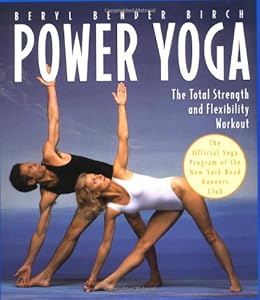
Cover of "Power Yoga: The Total Strength ...Cover via AmazonPower Yoga or Power Vinyasa
Power yoga is often also Hot Yoga meaning it takes place in a heated room. Most rooms are gnerally around a 100 degrees. The goal is to eliminate toxins from your body through sweat. Power yoga is more active and physically demanding than other yoga styles. Generally the goal is to improve strength and flexibility however you’ll move through the poses quite quickly.

Take a beginners course if you’re not familiar with standard yoga poses. In a power yoga class you certainly won’t have time to figure out what the instructor is doing before they move onto the next pose. It is important to be somewhat knowledgeable so you get the most out of the class.

Also, if the course is taught in a hot room make sure it’s safe for you. If you have high blood pressure or other conditions spending ninety minutes in a 100 degree room while exercising may not be good for your health.

Be sure to check back on Thursday for Part II, where we will cover several more yoga styles!  Or if you are ready to get started with some fun yoga workouts, check these out below.

Fun Yoga For Beginners (and Beyond):


Enhanced by Zemanta

Tuesday, May 17, 2011

Got a Few Minutes?

Ina Marx at 68, looked 35, and could do things with her body that a 16-year-old farm hand can't do, but she wasn't always fit-as-a-fiddle.

At the age of 30, while pregnant, she was forced to jump from the third story of a burning hotel. She landed on concrete, fractured her spine and pelvis, broke several ribs -- and lost her child.

A yoga class.Image via WikipediaOver the next 10 years Marx tried nearly every kind of regimen to rescue herself from this state. Nothing worked, and she eventually reached such desperation that she attempted suicide, twice. Then she discovered yoga -- her salvation.

With new confidence and a new lease on life, she began teaching yoga and has also written two books, ''Yoga and Common Sense'' and ''Fitness for the Unfit.''

With her special yoga program, she combines the physical aspects of Hatha Yoga with Raja Yoga, the meditative side.

Her method is specially designed to reach out to all those who have been left in the dust of the high-energy, high-impact state of modern fitness programs, and those who need to relax and unwind in a short amount of time to relieve a lot of stress quickly.

What's more, the best thing about Marx's form of practical yoga is that a few stretches a day, for a few minutes a day -- at home or in the office -- can lead couch potatoes and grouches to a very bright light at the end of the tunnel.

Practical Yoga Resources:
 

Enhanced by Zemanta