Showing posts with label Weight training. Show all posts

Tuesday, October 7, 2014

Top 7 Tips for Beginner Weight Training for Men

These beginner weight training tips aren't for everyone. But if you are serious about losing weight and building lean muscle then stick with these tips to get where you want to be, strong and fit.

Top 7 Tips for Beginner Weight Training

Body Fat meter
Body Fat meter (Photo credit: Wikipedia)
1)  Set your goals.  Boring tip sure, but how do you know where you are going without goals?  Talk with your trainer or mentor about setting a goal that is both challenging and attainable.   Here's an example.  Your 6-week goal is to lose enough body fat to get down to 10%-12% body fat.  If your current body fat index is 20% this is a reasonable goal for a 6-week program. However, if above 25% body fat, you may want to set this initial goal to 15% body fat.  The idea is to create a challenge for you, but still be able to successfully reach your goal.

2) Keep your workout sessions to no more 60 minutes.  If your workout sessions are longer than an hour you are wasting time. Here's why.  After a 60 minute workout your fat burning hormones drop and the carbohydrate stores are depleted.  Without these two critical muscle building components you aren't building muscle, and could actually be losing it. This is a common mistake people new to weight training make.  If you train too hard and too long, your body doesn't recover, you don't make progress, and before you know it,  you feel as if you can't keep up the program.

3) Use a progressive training routine.  This means that that as you improve, you perform an extra repetition or add on a bit more weight compared to your previous set.  The overall goal is to ensure that you achieve continuous improvements in muscle tone and definition.

4) Minimize your rests between sets to 60-90 seconds.  This means you perform more work during your workout hour. Studies show that shorter rests keep your growth hormones in action.  Besides building muscles, the growth hormone is responsible for burning off fat.  A shortened rest interval means that your muscle cells retain more water.  This makes you look leaner and more toned.

5)  Vary your training. The popular PX90 workout is a perfect example of a training program that focuses on different parts of your body on a daily basis.  The program varies techniques, changing repetitions and set parameters, changing up the rest periods between sets and changing the focus of the workout.

A complete weight training workout can be perf...
A complete weight training workout can be performed with a pair of adjustable dumbbells and a set of weight disks (plates). (Photo credit: Wikipedia)
6) Keep your sets to 8-15 repetitions.  Performing 8-15 repetitions reduces the possibility of injury.  Repetition pumps blood into your muscles that nourish the muscle cells and help them recover and rebuild faster.  However, if you are building a routine for you calves or abs, then go for higher repetitions, and double this value.

7) Use free weight basic exercises. When you use machines you limit your body to a two-dimensional exercise.  The best exercises for each body part use barbells, dumbbells, dips, pull-ups and squats. Exercises like this work more muscles, and build a more balanced physique, as well as reducing the risk of injury.

Weight training is the number one way to sculpt your body. Beginner weight training should not be complicated.  Just set your goals and create routines that follow these guidelines.


Tuesday, August 12, 2014

6 Tips To Minimize Your Chances of Injury During Weight Training

Weight training can be a great way to shed some excess fat, and transform your body from saggy to firm and toned.  This is best achieved with regular, scheduled workouts.

There are two main reasons why people stop doing their regular workouts: 

1. They lose the motivation to continue, which can be attributed to a number of factors.
2. They injure themselves too often. 

The good news is you have control over the first point listed above, as long as you have the desire to do some exercise - and you find a form of exercise you enjoy.  As for the second reason, although you cannot eliminate the chances of an injury, you can definitely take steps to reduce the risk of being injured during weight training. 

So what are some steps you can take to reduce the chances of being injured?

1. Seek Professional Advice 

Personal trainer assisting and correcting a cl...
Personal trainer assisting and correcting a client during a stretching exercise. (Photo credit: Wikipedia)
Assuming you are just starting a program, seek advice from a personal trainer.  He will guide you through a series of exercises to target the muscle groups you seek to improve.  He will also demonstrate the proper form, which will reduce the chances of hurting yourself. 

2. Concentrate

When you are about to do a set, focus on what the repetitions should look like.  Psych yourself up, and make the weights or the machine your focal point.  Do not be distracted by others around you. 

One of the worst things that can happen to you is to laugh at something when you are in the middle of a bench press, for example.  This is why people often listen to music with headphones while working out – it minimizes outside distractions.

3. Ask For Help

If you are pushing yourself to a new level, or even if you are just not sure that you will be able to get those last couple of reps in, ask someone to spot you through your set.  If you get in trouble, he'll be there to assist you. 

4. Know Your Limits

Do not lift beyond your ability.  When weight training, the tendency is to lift too much too quickly.  Lifting more than you can handle, creates several problems:
* It leads to poor form.
* There is a lack of controlled speed, which can lead to jerky or bouncy movements.
* You may unexpectedly go beyond your maximum range of motion.

Not only will the aforementioned points cause injury (especially the third point), but you will not be properly working out the muscles you wish to target. 

5. Stretch

Although there has been some controversy over the actual benefits of stretching before a workout to prevent injury, the general consensus is that joints and muscles should be thoroughly warmed up before lifting weights. 

A few minutes of cardio before a workout is advisable to help prevent injury.  And  although the jury is still out on whether or not stretching can help to prevent injury, regular stretching has one major benefit – it will increase your flexibility!  This is important for all ages. 

6. Stop

It is one thing to work through muscle stiffness, but you should not be working through pain.  If, on a lift, you feel that something is not right, or pain sets in, stop immediately.  Do not finish your set. 

In conclusion, when it comes to injury prevention during weight training, an ounce of prevention really is worth a pound of cure.  Using a common-sense approach with safeguards in place, will keep you on track toward your workout goals. 


Thursday, July 24, 2014

Video: Slow Burn Muscle-Building Exercise - Side Shoulder Raises

One of the best ways to build muscle and strength is using the "Slow Burn" method, as demonstrated in this video. While it may sound like this is a long, arduous workout, in fact, the slow burn method only takes a few minutes a week, and can build muscle mass as well as functional strength quite quickly. (A few minutes per week??  That's right...click here for a short introduction to this method.)

The trick is to use a heavy enough weight, and go very slowly, but only for a few reps. Slow burn exercise focuses not necessarily on the heaviness of the weight, but on the use and control of the weight. Working slowly means you are controlling the weight you are lifting, putting tension on the muscle at all times, instead of just using momentum to swing it (which is much less effective for building strength and muscle, and also more likely to cause injury).

See this video for an example, and for more on the Slow Burn method, see resources below.


Learn More About Slow Burn Fitness: 
   

Tuesday, July 22, 2014

6 Keys to Building Muscle Mass

Other than improving overall health, people who are building muscle mass are usually doing it to make noticeable changes to their bodies.  Obviously, lifting weights is a key component to this, but it is only one piece of a larger set of things that can be performed to increase muscle size.

Below are six tips to building muscle mass that you can use to help you reach your goals.

1.  Proper Nutrition 

Doing all the weightlifting in the world will not help your muscles grow if your body does not have the proper fuel.  There are certain foods your body needs, especially when weight training.

These foods include:

English: The lasagna is made with spinach (as ...
Lasagna made with spinach and whole wheat pasta and veggies. (Photo credit: Wikipedia)
1. Protein – Consume at least a half gram per pound of body weight per day to maintain muscle, and up to one gram per pound of body weight to build muscle.

2. Carbohydrates – Consume complex carbohydrates such as oatmeal, brown rice, and fresh fruits and vegetables for energy sources that last longer.

3. Good Fats – Fats high in omega 3's are found in coldwater fish, some nuts, and eggs.

4. Plenty of Water – Muscles retain a lot of water, so when building muscle mass, consume one cup of water for every twenty-five pounds of body weight.

2.  Rest

Muscles need intense training to grow.  The weight training breaks down muscular tissue, and as a result, muscles need recovery time.  It is during the recovery and repair that muscles get bigger and stronger.  Allow at least one day off, but ideally take two to three days off before training the same body part again.

3.  Consistency

Maintain a regular workout schedule.  This does not mean sticking to the same program day in and day out, but rather keeping the frequency of your visits to the gym consistent from week to week.

Your progress will be slow or non-existent if you work out for two weeks, and then decide to take two weeks off.

Standing Barbell Curl exercise for Biceps-->bi...
Standing Barbell Curl exercise for Biceps. (Photo credit: Wikipedia)
4.  The Right Routine

When working out, the key to building muscle mass is to lift safely the most weight that you can.  You should feel as though you are pushing yourself, and not just breezing through a set.

You should aim to do three to four sets per body part, with six to ten repetitions (reps) per set (if you can do 20-25 reps at a time, your weights are much too light).  It should be difficult enough that you may not be able to complete the last couple of reps on the last set or two.

5.  Variety

Once you feel comfortable with the exercises in your program, consider switching the order of your exercises.  This may help to prevent a plateau that sometimes occurs with your body becoming used to a particular routine.

Later on, you will always want to look at switching over your program altogether, as new exercises will target slightly different muscle groups.

6.  Whole Body Workout

Your body operates as a single unit with many muscle groups.  Neglecting or completely ignoring one body part will have limitations on how much your other body parts can develop.  For example, strengthening your abdominals without developing your back muscles could create problems down the road.

Make sure your workouts include exercising multiple muscle groups at once.

In summary, when it comes to building muscle mass, these six items are key.  By implementing all six of them, you will be able to reach your muscle-building goals.


Tuesday, November 26, 2013

Dispelling 3 Myths Surrounding Toning Exercises

Toning exercises have long been promoted, mainly for women, as a way to bring out the definition of muscles without the worry of looking bulky and overly muscular.  Many women have wanted the look of the muscles, without the size.  Weight lifting routines have attempted to cater to this demographic, only to fail.  Why?  Because when it comes to toning exercises, there are some myths that exist that are concealing the truth! 

English: sketch of the muscles in the arm
Sketch of the muscles in the arm (Photo credit: Wikipedia)
Myth #1:  Using heavier weights to work out will produce bigger, bulkier muscles.

* For women, this is generally not true.  It does hold true for men, however.  This is because men have more testosterone, the hormone responsible for muscle growth.

* Since women do not have large amounts of testosterone, they will not produce the large muscles that men sometimes do, unless they are taking a hormone supplement.

* In order to have toned muscles, you will have to work them out.  Using heavier weights will build muscle, but these gains will be limited by what your body will allow, so in most cases women don't need to worry about developing bulky muscles.

Myth #2: Doing more repetitions (reps) using less weight will produce toning and definition.

* If you flex a muscle, and it is still soft to the touch, it does not necessarily mean you lack toned muscles.  What is does mean is that the soft tissue is a layer of fat that is covering your muscles. 

* The only way to bring out definition and that toned look in your muscles is to shed that layer of fat on top of them.  You can have all the muscle you desire, but if a layer of fat is covering your muscles, you'll never really see them.  This is why you don't really see the individual muscles on competitors in a "Strongman Competition."  Having a layer of fat on their muscles is not a worry to them.  Instead, being strong is their main focus.  But no one would dare argue that they are not muscular. 

* There is one purpose to doing more reps with less weight, however.  If your goal is muscle endurance and not muscle growth, such as a long-distance runner, then you would follow this routine.  More reps with less weight promote endurance, not growth. 

The cross trainer can be used to warm up muscl...
Machines like the cross trainer can be used to warm up & exercise muscles in both the upper and lower body. (Photo credit: Wikipedia)
Myth #3: Cardiovascular training does not help to tone muscles. 
 
* If taken at its most basic level, this statement is true.  Generally, cardio training is not  related to toning exercises, although it may depend on the type of gym you go to, and what type of exercise you are doing. Some exercises, such as calisthenics, provide cardio exercise and also build strength at the same time. 

* If we follow the premise that in order for muscles to be seen, the layer of fat between the muscles and the skin must be shed, we can see the importance of cardio training. 

* Although weight training can shed calories and fat to a certain extent, only cardio training will give you the chance to work at a fat-burning zone for an extended period of time.  This is therefore the most effective way to burn fat - especially if you use the interval training method. 

So there you have it!  Three myths about toning exercises have been dispelled.  If toning your muscles is your goal, you do not need to decide between lighter or heavier weights.  Use weights that will challenge your muscles, and they will begin to show through as your cardiovascular training gives you the definition you seek. 

Enhanced by Zemanta

Tuesday, November 5, 2013

4 Benefits of Using Free Weights As Part of a Weight Training Program

When you decide to embark on a weight training program, one of the first questions you will have to address is, "Do I use machine weights or free weights?"

Beginners will tend to gravitate toward machine weights, because they do not have to worry about balancing a set of dumbbells through a range of motion, and they can just focus on feeling the burn.  And that's okay.  However, as you progress and become more comfortable with a weight-training program, consider incorporating free weights as they have many advantages.

So what are the advantages of using free weights in comparison to machine weights?

Dumbbell chest fly
Dumbbell chest fly (Photo credit: Wikipedia)
1. By using free weights, you will innervate many more stabilizer muscle groups as you work to balance the weight through your range of motion.

* The fact that machine weights are supportive is actually their hugest downfall.  They are so supportive that you only need to use a few major muscles groups for any given exercise.

* In contrast, when you use free weights, you are targeting extra muscle groups.  This will help to burn more calories than with machine weights alone - and will balance your muscles and help avoid injury.

2. Using free weights allows you the flexibility to change the path that you will take when performing an exercise.

* Unlike the singular, repetitive motion of a machine that targets the same muscles over  and over, varying the path of your dumbbells will work different muscle groups.

* Dumbbells and other free weights have a tremendous versatility that machine weights cannot match.  You can use any given dumbbell to work out almost every different area of your body.

For example, in addition to doing bicep curls, a dumbbell can be used: 
o in a bench press
o it can be held against your chest during a series of crunches
o it can be pressed over your head to work out your shoulders
o it can even be held between your feet during a hamstring curl.

* Using machine weights for all of these exercises would require multiple machines.

Free weights
Free weights (Photo credit: Wikipedia)
3. Free weights take up much less space when compared to the size of a typical machine system.

* Further to this, since machines usually boast of attachments and the latest technology, they inevitably cost many times more than what it would cost to equip yourself with a basic set of free weights.  Cost and space are two key factors when people choose any workout equipment.

4.  Free weights do not allow your stronger side to compensate for the weaker side.

* Weight machines focus on working out both sides of your body in tandem.  The pec fly machine is an example.  If you have one side of your body that is stronger, which is often the case, the machine will allow your stronger side to work harder and compensate for the weaker side.

* As a result, machine weights will often hide your weaknesses on one side, however small they may be.  This cannot happen with free weights, because if your left side cannot push out that last rep, your right side cannot help it at all.  This allows you to develop more evenly balanced strength.

In summary, a weight-training program does not have to be one dimensional – only machine weights or only free weights.  It can be a combination of both.  However, definitely consider letting free weights play a significant role in your weight training, as the benefits to using them are numerous.


Enhanced by Zemanta

Saturday, June 22, 2013

Video - Weight Training Workout for Fat Loss

This video gives a comprehensive full-body weight training workout that is great for building and toning muscle, boosting metabolism, and burning fat. The voiceover gives great technical instruction during the demo, so be sure to pay attention to his tips for proper form and technique. This will help you get the most out of the workout as well as avoid injury. Do this workout three times per week, with interval cardio on the in-between days, and one day of rest, and you will be amazed at how the weight just melts off!

Be sure to warm up with a few minutes of light cardio before beginning this workout, as the video doesn't include one. And incorporate some good cool-down stretches at the end. This will increase flexibility and help your muscles recover.

Tuesday, June 18, 2013

Muscle Facts Versus Fiction

If you've been weight training, here's a short list of bodybuilding myths that are fictional - and the corresponding truths that will help you safely make the most of your weight training workouts.

1. The 12 Rep Rule

Cover of "The Truth"
Cover of The Truth
Most weight training programs include this many repetitions for gaining muscle. The truth is this approach doesn't give the muscles enough tension for effective muscle gain. High tension (e.g. heavy weights) provides muscle growth in which the muscle grows much larger, leading to the maximum gains in strength. Having  longer tension time boosts the muscle size by generating the structures around the muscle fibers, improving endurance.

The standard prescription of eight to 12 repetitions with medium weights provides a balance, but by just using that program all of the time, you do not generate the greater tension levels that are provided by heavier weights and lesser reps. Change the number of reps and adjust the weights to stimulate all types of muscle growth - you want some lower weights and more repetitions, and some with higher weight and fewer reps.

2. The Three Set Rule

The truth is there's nothing wrong with three sets but then again there is nothing amazing about it either. The number of sets you perform should be based on your goals and not on a half-century old rule. The more repetitions you do on an exercise, the fewer sets you should do, and vice versa. This keeps the total number of repetitions of a given exercise equal.

3. Three to four exercises per group

The truth is this is a waste of time. Combined with twelve reps of three sets, the total number of reps amount to 144. If your doing this many reps for a muscle group, you're not using heavy enough weights to make much of a difference for most of your muscles. Instead of doing so many varieties of exercises, try doing 30 to 50 reps total. That can be anywhere from 2 sets of  15 reps or 5 sets of 10 reps.

English: an exercise of thigh
Upright squat (Photo credit: Wikipedia)
4. My knees, my toes
It is a gym folklore that you “should not let your knees go past your toes." Truth is that leaning forward a little too much is more likely a cause of injury. In 2003, Memphis University researchers confirmed that knee stress was almost thirty percent higher when the knees are allowed to move beyond the toes during a squat.

But hip stress increased nearly 10 times or (1000 percent) when the forward movement of the knee was restricted, because the squatters needed to lean their body forward and that forces the strain to transfer to the lower back.

Focus on your upper body position and less on the knee. Keep the torso in an upright position as much as possible when doing squats and lunges. This  reduces the stress generated on the hips and back. To stay upright, before squatting, squeeze the shoulder blades together and hold them in that position; and then as you squat, keep the forearms 90 degrees to the floor.

5. Use your abs to lift weights

The truth is the muscles work in groups to stabilize the spine, and the most important muscle group changes depending on the type of exercise. The transverse abdominis is not always the most important muscle group. Actually, for most exercises, the body automatically activates the muscle group that is needed most for support of the spine. So if you focus only on the transverse abdominis, it can recruit wrong muscles and limit the right muscles. This increases the chance of injury, and reduces the weight that can be lifted. Listen to your body - it knows best! If you have an ingrained habit of intentionally tensing your stomach muscles when lifting, try relaxing your body, then lift a lighter weight, and see where your muscles naturally flex to complete the movement. Once you know which muscle group is engaged for each various exercise, you'll strengthen the correct muscles for each movement, and get a more complete workout.


Enhanced by Zemanta

Saturday, March 23, 2013

Video: 10-Minute Metabolism Boosting Workout

This great 10-minute workout will build and strengthen your muscles throughout your entire body and raise your metabolism so you burn more fat for longer. The exercises are fairly simple and pretty much any fitness level should be able to do them - you will just go with the weight that is appropriate for you. This one works, arms, legs, back, and everything in between - all in just 10 minutes. You will want to have hand weights available for this workout. And for more fun metabolism-boosting workouts, see below.

Metabolism Boosting Workout, Full Body Fitness, Class FitSugar
We know you're pressed for time, so we asked celeb trainer Ashley Borden to create a quick workout that will help build metabolism-boosting muscle. This work...


More Fun Metabolism-Boosting Workouts:
   
Enhanced by Zemanta

Saturday, February 23, 2013

Video - When Can Children Start Lifting Weights?

This short video addresses the subject of weight training for kids - in reality, children are "weight training" from the time they are able to lift themselves up off their bellies. We just don't usually think of it that way. This quick video explains when and why kids might be ready (or not) to add external weight to their activities. (Always consult your child's doctor before starting any new weight-bearing exercise.)

Kid's Fitness - When Can Children Start Lifting Weights?
www.Facebook.com David Kittner, a Youth Conditioning Specialist with Athletic Foundations in Brampton, discusses a concern parents have with their young kids lifting weights. This presentation was part of the St. Andrew's Catholic School Just For Par...


Enhanced by Zemanta

Thursday, February 21, 2013

Weight Training for Children - Important Things to Consider

It's great if your child loves to exercise, but what if you have a younger child of 6 to 8 years old that wants to participate in more adult activities, such as lifting weights?  While some think it is perfectly fine for children to lift weights, there are others that think differently.

English: Osgood-Schlatter disease. Lateral rad...
Osgood-Schlatter disease. Lateral radiograph of the knee demonstrating fragmentation of the tibial tubercle (see inset) with overlying soft tissue swelling. (Photo credit: Wikipedia)
The long and short of it is that while it can be very beneficial for your child to partake in a weight training regimen, there are a few things that you should keep in mind.

No matter how you look at it, children aren't miniature adults and therefore you can't use the same methods with growing children that you can use with adults, as children are different from adults emotionally, anatomically, and physiologically.

All children have immature skeletons, as their bones don't mature until somewhere between 14 - 22 years of age.  With girls, exercise (or the lack of it) during childhood can have very critical effects on bone health that can last for their entire lives.

Children are often times vulnerable to growth related overuse injuries such as Osgood Schlatter disease.  Children also have immature temperature regulation systems due to their having a large surface area compared to their muscle mass which will cause them to be more susceptible to injury when they aren't properly warmed up.

Children don't sweat as much as adults do, so they will be more susceptible to heat exhaustion as well as a heat stroke and dehydration.  Due to their low muscle mass and immature hormone system, it makes it harder for them to develop strength and speed. Their breathing and heart response during exercise are also different from an adult's, which will affect their capacity for exercise.

On the other hand, young boys and girls can drastically improve their strength with weight training although opposed to adults, neurological factors instead of muscle growth factors are mostly responsible.

When you consider weight training programs for children, first and foremost you should obtain a medical clearance from your child's pediatrician.  The first approach to designing a program is to establish a repetition range of 8 - 12 and keep the work load appropriate for the range, as well as the age, size, and strength of your child.

The weight stack from a cable machine: each pl...
 (Photo credit: Wikipedia)
You should ensure that workouts are spread out enough to have at least 1 - 2 full days of rest between sessions. The main focus when working out should be on the form of every exercise performed, and not on the amount of weight being lifted. Proper technique is important for everyone when working out, but especially children, whose smaller growing frames can be especially adversely affected by injury. Teaching the importance of proper form and technique while young will also carry over into adulthood, and give them a sense of responsibility and control over their own bodies.

Before weight training, be sure your child does a proper warmup including stretching to avoid injury.  Start your child off with light loads and then make adjustments accordingly.  No more than 3 non-consecutive weight sessions should be done in a week.  You should also see to it that they drink plenty of water before, during, and after exercise.  Getting enough water is very important with exercise, as it is often very easy to get dehydrated - especially with children who have smaller bodies that hold less water.

If you follow these important tips, your child can definitely benefit from incorporating some weight training into their activities. It can help them build strong bones for life, balance out their musculature, and promote increased self esteem and independence - all these are great benefits that will help them grow into healthy adulthood.
Enhanced by Zemanta

Saturday, February 9, 2013

Video - Resistance Training Workout for Fat Loss

This is a great 30-minute resistance training workout with weights that will really help with your weight loss goals. Designed to strengthen and tone the muscles, increase metabolism, and burn fat, this is a great workout to add to your weekly routine a couple of times a week - it really can get you looking great in time for beach season!

These exercises will work your entire body, using both body weight and hand weights for resistance. Some of the exercises are pretty unique, and they really hit all the different muscles in both upper and lower body. You'll get toned arms, shoulders, abs, thighs, butt and more, all in one workout! The instruction and demonstration is very clear and focuses on proper technique and form for maximum results while avoiding strain or injury.

If you are just starting out, you may want to try this workout first without weights. You'll get a good feel for the proper technique, and will still get benefits as you start to build up your fitness level. As you get stronger, you can add very small weights, and gradually increase as your function and strength improves.

This is the full workout - you will do 3 sets of each exercise. If you can't do all the repetitions to start with, that's fine. Start with 8 or 10 of each, or whatever you can do, but do all 3 sets. And as he notes in the beginning, you should do a light warmup and some stretches first before beginning the series, as this video does not include those.

Check it out, and get ready to get toned!

Weight Training Workout for Weight Loss - Fat Burning Functional Strength Training Workout
Find out how many calories this burns @ bit.ly Find out when our newest videos go live by following us @ on.fb.me Check out our 8 Week Fat Loss Program to Lose Weight & Tone Up Fast that uses our free workout videos @ bit.ly The clothing you see in t...

Enhanced by Zemanta

Thursday, February 7, 2013

The Importance of Resistance Training For Women

More and more women these days are recognizing the benefits of resistance training. Resistance training is beneficial to just about anyone of any age, but it is especially important for women, who are at higher risk of bone problems as we age. Resistance training promotes physical activity and helps maintain a healthy body as we get older.

Lying dumbbell triceps extension
Lying dumbbell triceps extension (Photo credit: Wikipedia)
But before you start lifting weights, you should know the proper way to execute the exercises. Many women may experience injuries when they incorrectly lift weights, especially if it's a new activity that hasn't been tried before. Seek the assistance of a qualified personal trainer if you are new to resistance training. If you are overweight, you'll probably want to add in some cardio exercise such as walking or interval training or jogging, as this is just as important to your overall fitness, but resistance training will help you achieve your optimal weight more quickly, and will assist in your other weight loss efforts.

Women usually do not have the natural muscle structure that most men have. They may not also have the same strength to carry heavy loads or the same resistance that men have. This discrepancy can get worse as you get older. Your body may no longer have the same strength as when you were young. Often this is simply a result of lifestyle changes. When it comes to muscle tone and function, "move it or lose it" was never more true!

You can benefit in many ways when you get into resistance training. Even if you are not an athlete or a body-building enthusiast, you can get a lot out of a good resistance training program. Having an active body and well-toned muscles can provide you more strength and endurance to perform the tasks of your daily life, as well as to participate in fun recreational activities that keep you active and fit.  

Before starting your resistance training exercises, you may want to do some stretching and warm up exercises to allow the blood nutrients go to the muscles and joints of your body. Muscle stretching also helps in lessening the risks of injuries and muscle pain after the work out. Muscles tend to get sore, and also can be strained, if you are not well warmed-up before the workout. In addition, muscle stretching improves your flexibility. You will be able to execute the exercises more comfortably and effectively.

Using the diagonal sled-type leg press machine.
Leg press machine. (Photo credit: Wikipedia)
When you are ready to lift weights, you should first work on your larger muscles, then the smaller ones. You may then finally go to the muscles that are isolated. For example, push-ups can enhance the upper muscles of the body, but before going there, you should first focus on the larger muscle groups such as those in your quads, thighs and butt. Exercises for these areas include such movements as squats, box step-ups, and lunges. You may also use the leg extension machine and the leg press machine to exercise these areas.

It is important to always remember to also work the opposing muscles. Muscles can get imbalanced if the exercises you do are not equally distributed, and this can lead to injury. For example, when performing triceps extension exercises, it is advised that you also do bicep exercises to balance it out. If you work out on the chest and the stomach area with crunches or other similar exercises, it is important that you also do back extension exercises to keep things in balance and prevent injury.

Always take a rest and do a few stretches after your resistance training workout. Drink plenty of water, and allow your muscles to cool gradually by moving around a bit. This can help prevent muscle soreness. Once you've been participating in resistance training for a while, you will find that you are more ready and physically fit for many kinds of sports and other fun activities that can enhance your life.

Enhanced by Zemanta

Tuesday, February 5, 2013

Reaping the Benefits of Resistance Training

Do you want to have a stronger and more lean and toned body? One of the best things you can do to achieve this is to add resistance training to your workout routine.

What Is Resistance Training?

Resistance training involves activities that use weights, machines and even body weight to exercise the muscles. It is also known as strength training or weight training. This can be very helpful in achieving a healthier and leaner body.

This kind of training is usually associated with athletes who are seeking to build strength. Some people might think that resistance training will increase the size of the muscles, but in actuality this isn't necessarily true. Resistance training is simply about increasing the strength of the body, not its size.

This form of exercise can be practiced by anyone who wishes to build and tone their muscles to give the body a better look. Even the elderly can reap significant benefits through resistance training, which can help prevent atrophy and disfunction as we age, and may even reduce the incidence of osteoporosis. (See benefits below for more on this.)

How Does Resistance Training Work?     

English: PACIFIC OCEAN (Jan. 22, 2010) Joshua ...
 (Photo credit: Wikipedia)
A resistance training program will often include the use of various exercise equipment and machines like the bench press, dumbbell or barbell. Resistance bands or straps may also be used. When the equipment is used, the muscles of the body will be pitted against the weight. The cells of the body will then adapt to the extra weight. This will then result in the enlarging and increasing of the nerve cells to help in the muscle contraction.

Before doing any resistance training, it is best to consult first with your personal physician and also a qualified trainer. This goes especially for people who have medical conditions or are overweight.  If using equipment, you also will need training on which equipment is best for the needs of your body, and how to properly use the equipment to avoid injury or muscle strain.

Resistance training can also be done without using equipment. Doing push-ups is one good example. You can do it just about anywhere where there is enough space for you to move. This time it is your own body weight that your muscles will work against. Other types of calisthenics, as well as yoga, Pilates, and a number of other exercise forms also include resistance exercise without equipment or machines.

What Are the Benefits of Resistance Training?

1. Increase Bone Mineral Density
Bones are constantly remodeling, meaning the tissues break down at the same time they build up. The peak of remodeling takes place during puberty. However, as a person ages, they may experience problems with bone mineral density as the remodeling may not be as active anymore. This is especially a problem for post-menopausal women.

Bone mineral density is usually supported by hormones. To address the problem of not having the hormones to maintain the bone mineral density, physical activity is the next best option. Resistance training is one physical activity that can address this - and it can be done at any age.

2. Increase Strength
Strong bones and strong muscles are one of the major benefits of a resistance training program. As your muscles work against the weight, they pull against the bones, which creates additional bone strength and density.

English: an exercise of upperarms and forearms
Resistance exercise of upper arms and forearms (Photo credit: Wikipedia)
3. Increase Range of Activities
When your body is strong enough to carry a considerable weight, then you will also be capable of doing more strenuous activities. When you can do more, not only will you have a sense of accomplishment, but studies show you will gain higher self-esteem and more interest in life, and you can live a more active and enjoyable lifestyle.

4. Reduce Body Fat
Stronger and more active muscles increase metabolism, which helps burn fat even when you're not working out. Resistance training will also improve the tone of your body, so that it will look leaner and trimmer.

5. Improve Health & Function for the Elderly
For the elderly, undergoing a resistance training program will help improve their health and decrease many of the risks brought about by aging. They can be more independent, without needing to rely on other people for doing simple things. It also decreases the risk of injury, and promotes longevity.

6. Improve Heart Condition
Regularly doing resistance training can result in lowered heart rate and lowered blood pressure, especially after exercise. The risk of heart disease is also reduced to a considerable extent.

Resistance training however must be done properly. It requires commitment and consistency. It needs to be done in a regular basis, following a schedule that the doctor or the physical trainer recommends. If done incorrectly, the benefits you'll receive may be much reduced, and some exercises may even cause injury if overdone, or if your body is not ready for them.

The key here is to simply take your time. Do the exercises one step at a time, and do them correctly. As your body condition improves, you can move on to more challenging tasks. As your strength increases, so will your overall muscle tone and condition, and your general health.
Enhanced by Zemanta

Thursday, December 6, 2012

Reaping the Benefits of Cardio Training

Your body is the most valuable asset you could have in your lifetime. Thus it is important that you take good care of it. Give it the proper attention it needs - feed it healthy and nutritious foods, give it plenty of rest and water, and most of all, keep it moving!

When it comes to ensuring and maintaining the health of your body, cardio training is an important factor.

What Is Cardio Training?

Cardio training involves any activity that requires the use of the large muscle groups of the body in a regular and uninterrupted manner. It elevates the heart rate to between 60 and 85 percent of the fastest heart rate possible for you.

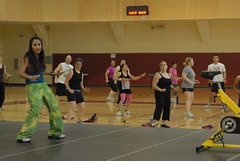
Aerobithon - U.S. Army Garrison Humphreys, Sou...
 (Photo credit: USAG-Humphreys)
Some of the usual cardio training activities are walking, jogging, running, aerobics, cycling, tae bo, swimming and rowing. Cardio training is considered an aerobic exercise as one is required to move from one exercise to another rather quickly, while keeping the heart rate high for a certain period of time.

What Are the Benefits of Cardio Training?

1. Gives Energy to the Body

You can expect more energy and higher endurance with regular cardio training.

2. Prevents Diseases

Heart disease, diabetes, obesity and even high cholesterol can be prevented or moderated with regular cardio training. A good cardiovascular training program strengthens the heart and the lungs.

3. Controls Your Weight

With cardio training, you are able to burn more calories and lose weight. For those who already achieved their ideal body mass, cardio training will make it easier to control and maintain your proper weight.

Cardio training helps burn calories. However this generally depends on your current weight and the kind of cardio training you are undergoing. Before beginning any new exercise program, be sure to consult with your physician or trainer to determine the proper type of training for your needs.

4. Lose Body Fat

Some people do not have a problem with their weight overall, but may have more body fat than they would like. Cardio training will help in getting rid of excess fat and building lean muscle, which will in turn increase your metabolism so that you burn more fat even when at rest. Most cardio activities involve the movements of large muscle groups. Regularly doing this kind of training will make you leaner over time.

English: Exercise work zones (Fox and Haskell ...
Exercise work zones (Fox and Haskell formula between 20 and 70-year-old): red zone (VO2Max), anaerobic, aerobic, weight control and warming up. (Photo credit: Wikipedia)
5. Fight Boredom

Cardio training is fun. It pumps up your system. You will feel more energized and your mood will improve. (See below for my favorite cardio training program - it's so much fun I do it almost every day, and never get bored - and it only takes 15 minutes a day!)

A Few Recommendations to Better Enjoy the Benefits of Cardio Training

Cardio training is essential when you need to make health improvements. For starters, it is best to do between 10 and 30 minutes of cardio exercise, 3 to 5 days a week. If you are aiming for weight loss, the training should be done 5 days a week. The more frequently you do it; the more likely it is that you will lose weight. However, avoid exhausting yourself too much - this can be hard on the body and you may get tired of it or experience burn out. Avoid going beyond 45 minutes - in fact 30 is probably more than enough if it's the right type of training. Remember, it has to be done in a regular basis.

1. Start now. Walk or ride the bike around the neighborhood now. Follow that aerobics video you purchased. Set a goal and follow that goal. At the same time, modify your diet too. Eat healthy whole foods with plenty of vitamins and fiber. Avoid processed foods and sugar.

2. As you increase your fitness level, the intensity of the training should also increase, and you should be sure to vary your activity so that different parts of your body get exercised daily. You can easily implement this by intensifying some parts of the training. If you are into jogging or running, increase your speed every 5 minutes for a minute or two, then slow back down. This will give your body a challenge, and keep you from hitting a plateau in your weight loss goals.

3. You should also avoid doing cardio exercises before bedtime. You will have a difficult time sleeping if you do so as the energy level of the body will stay high for some time.

4. If you are undergoing weight training too, do the cardio exercises right after your weight session, not before.

Aerobic exercise
(Photo credit: sisterbeer)
5. It is best to have a snack about 30 minutes before doing cardio exercises. Do not start with training on an empty stomach. This will not help in achieving the proper momentum when you train. At the same time, avoid indulging in large meals too before exercise. Have plenty of water on hand - you'll need it!

6. If possible, it is great to do cardio exercises outdoors. This way you can easily interact with nature and breathe fresh air, and it keeps things interesting.

Most of all, be consistent and stick with your cardio training once you have started it. This is the only way that cardio training will benefit your body and your health in the long run.

Fun & Effective Cardio Training Workout: 

Enhanced by Zemanta

Thursday, November 15, 2012

Intense Kettlebell Workout Produces Superior Results

Russian Kettlebells are a great new workout trend. These kettlebell workouts may be an excellent alternative to maintaining a full home gym or having an expensive club membership. With Russian kettlebells you can develop superior gains over traditional workout methods and save lots of space in your home.

One of the top instructors of Russian Kettlebell training is Pavel Tsatsouline. He is a former Spetznaz trainer. For those who may not know, Spetznaz is the Russian equivalent of the CIA or special forces.

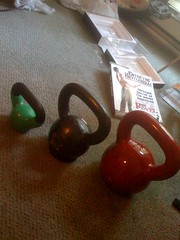
English: Three commonly used kettlebells (Drag...
Three commonly used kettlebells (Dragon Door Brand) of various sizes. (Photo credit: Wikipedia)
After studying some of Pavel's books you can definitely find out how to have explosive instant power ready at all times - very handy for a special agent. But, not everyone is a spy; in fact very few of us are. So what benefits does kettlebell training have for the average woman or man?

Kettlebell training can be a great way to lose weight, tone up the body, and stay in shape once you get it there, along with the added benefits mentioned above.

And not only that, kettlebell workouts may be better for you than regular traditional weights. In one of his books, Pavel mentions some of the fitness tests that were used to compare kettlebell training to traditional workouts. The kettlebell trainers seemed to be in much better shape according to Pavel. And Pavel would know - You can see a picture of Pavel on his web site as well as his books and DVDs. The guy is well muscled and toned for someone that avoids traditional "weight training" like the plague.

Speaking of muscle and tone, check out the incredible ab muscles that Pavel can show you how to develop. Pavel, being an expert in physical training combined with his unique experience and insight is fully qualified to show you all about physical fitness. Whether you are male or female, Pavel can show you the way to fitness.

Another thing that is fun about Pavel and his work is that he brings his colorful and interesting Russian personality into play. For example, just think of the title of one of his books, "Power to the People!"

Power by Pavel
Power by Pavel (Photo credit: wu_135)
Me? I find that title humorous, but if I had to explain why I think it's funny, I'm not sure that I could. It might be the underlying but subtle notion that liberation is in order for someone. Come to think of it, I guess liberation is in order. Pavel wants to show us a better way to fitness and free us from our need to spend an inordinate amount of time in the gym and spend it more wisely and effectively, so that we can have great physical fitness and time to enjoy it as well.

As you can see by glancing at his pictures, Pavel not only knows how to develop an amazing physique but he also knows how to keep himself flexible at the same time. He also has several books and DVDs on building flexibility through stretching.

Maybe now you can understand why I think this man has some answers to fitness that we might not be able to find anywhere else, nor all in one convenient location either. For more on his kettlebell workouts for strength and fitness, see resources below.

As always, consult a primary care physician before embarking on any fitness regimen. This article is for informational purposes only and is not to treat, prevent or diagnose any physical condition.

 Kettlebell Workouts with Pavel:
   
Enhanced by Zemanta

Tuesday, November 13, 2012

Why Weight Training Is Good for Body & Mind

We all could use a boost to the old self-image every now and then. When you look good, you feel good. A confident person is noticed by others. One way to achieve this “new attitude” is through training with weights. Weight-bearing exercise is essential for every man and woman to maintain good health well into later life. And weight training is not necessarily about bulk but tone. Everybody doesn’t want to be Mr. or Ms. Olympia. Most people just want a well-proportioned figure that they can be proud of.

Wrist straps allow lifting heavier without hav...
(Photo credit: Wikipedia)
The challenges of weight training help to improve the mind’s ability to focus. To perform the exercises properly takes concentration. You have to visualize each part of the movement. See what the muscle is doing when the weight is raised and when the weight is lowered. Focus keeps the body from injury. Proper technique brings the results you want in less time.

Weight training teaches discipline. The mind learns to associate a daily regimen with the achievement of your desired goals. Without a goal in mind, weight training becomes just another activity without purpose. We do enough of that already. Seeing the results of your daily effort will help reinforce the discipline. Discipline learned here will spill over into other areas of your life: your job, marriage, and child rearing.

Weight training also teaches optimism. When people walk around with a pessimistic attitude, the whole world looks half empty. Weight training can take the body you have now, whatever shape you are in, and transform it into the vision you have for yourself. But, you must believe that it is possible. The mind is the key. As the definition of the muscle starts to show, you gain a more positive outlook.

weight training
weight training (Photo credit: midwestnerd)
Humility can also develop with weight training. You’ll have good days and bad days just like with any other exercise. To get started, someone will need to show you what to do. If you are having trouble with a new technique, you will have to ask for help. Trainers in a gym are there to help. No one can do it alone. When working with heavy weights, everyone needs a spotter for safety. Needing help is not a weakness. Weight training shows that humility keeps us grounded and out of trouble.

One thing we all benefit from is higher self-esteem. Your newly fit and shapely body will definitely make you look good. When people notice, your attitude towards yourself changes. Negative thoughts of the past will be replaced with self-affirming ones. Who can argue with all these benefits? Your mind is a powerful tool. Changing how it thinks takes effort. Weight training offers a way to begin that change and make it permanent.

Enhanced by Zemanta

Thursday, September 13, 2012

Benefits of The Exercise Ball

By now, you’ve probably seen an exercise ball.  They’re those things that look like giant playground balls that you see people rolling and stretching on at the gym.  If you’re like me, you’re probably hesitant about using one of these balls.  You may be worried about looking silly or can’t actually figure out how they work.  Well, next time you’re at the gym, why don’t you try one out?  You’ll probably find the benefits well worth it.

An exercise ball.
An exercise ball. (Photo credit: Wikipedia)
What most people consider to be the biggest benefit of using an exercise ball is its ability to strengthen your core muscles.  These are the muscles in your abs and back - the muscles you work so hard to tone up with crunches.  When you do exercises on a ball, your abdominal and back muscles are constantly working to make adjustments and keep you balanced.  Unlike traditional exercises, the ball works the muscles on the front and back of your body at the same time, promoting a more balanced and healthy physique.  Even if you’re targeting a different area, your core muscles are still getting exercise.  Plus, there are tons of exercises you can do on a ball that focus on strengthening and toning these muscles even more. 

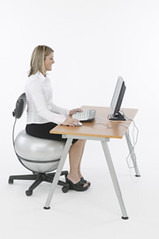
If you slump at a desk all day and find that your back, neck, and shoulders are sore at night, you can definitely benefit from an exercise ball.  By toning your core muscles, exercise balls can do wonders for your posture.  When your core is toned, the muscles keep working after you’re done working out, helping you sit up straight.  You can get this benefit even without working out by replacing your desk chair with an exercise ball.  This way you to maintain proper posture to stay on the ball and work your core at the same time!  If you don’t think your workplace will allow you to sit on an exercise ball at your desk, they make exercise ball chairs that provide the same benefit with a more professional look.

Executive Ball chair
Executive Ball chair (Photo credit: FunnyBiz)
Have you had a previous injury to your back, knee or hip?  Do you worry about exercising because it might aggravate your condition?  An exercise ball can help.  The ball can be used to support your body while you stretch or build muscles.  Those with back injuries may even be able to find some relief from pain by lying on the ball and gently stretching the back muscles and vertebrae.  These balls are so good for helping relieve strain and preventing future injury, they’re often used by physical therapists for back rehabilitating back injuries.

If you find it hard to bend, move, and even touch your toes, an exercise ball can help you improve your flexibility.  It can help you stretch yourself farther, but it can also provide support so you can stretch certain muscles more safely.  Their ability to help stretch you out is one of the biggest reasons physical therapists swear by these balls.

Exercise balls can provide great benefits for those suffering from "sitting disease," and slowly becoming crippled by a sedentary lifestyle. Use one in your workouts, at your desk, and at home, and you'll reap the benefits over time, with more flexibility and strength, and less pain.


Grab An Exercise Ball Today:
   
Enhanced by Zemanta